Hosting a relaxed autumn supper
As the evenings draw in, gathering friends for a meal becomes one of autumn’s great pleasures. Here is how to host a relaxed supper, focusing on atmosphere and enjoyment over formality.
By Sophie Lang · 27 September 2026 · Updated 8 October 2026 · 6 min read
The turning of the season from late summer to autumn brings with it a natural desire to gather inside. As the nights get longer and cooler, the appeal of a warm, inviting home filled with friends and good food is hard to resist. Hosting a supper is less about performing a service and more about creating a space for connection and conversation.
A relaxed evening is one where the host is also at ease. This means moving away from the idea of a flawless, formal dinner party and towards something more comfortable and forgiving. The focus should be on warmth, atmosphere, and simple pleasures, allowing you to spend time with your guests rather than being confined to the kitchen.
Planning a Menu You Can Enjoy Too
The most important element of a low-stress menu is choosing dishes that require minimal last-minute attention. Autumnal cooking lends itself well to this approach. Think of one-pot dishes like stews, tagines, or curries that taste even better when made a day in advance. A large roasting tin filled with a joint of meat or seasonal vegetables can be left to cook while you greet your guests.
Resist the temptation to attempt several complex courses. A generous main course followed by a simple dessert is often more than enough. A platter of good cheese with crackers, fruit, and chutney is a classic for a reason, requiring only assembly. Likewise, a good-quality tart or cake bought from a bakery can be just as satisfying as a homemade one, freeing up your time and energy for other details. Remember to ask about any dietary needs well in advance.
Setting an Autumnal Table
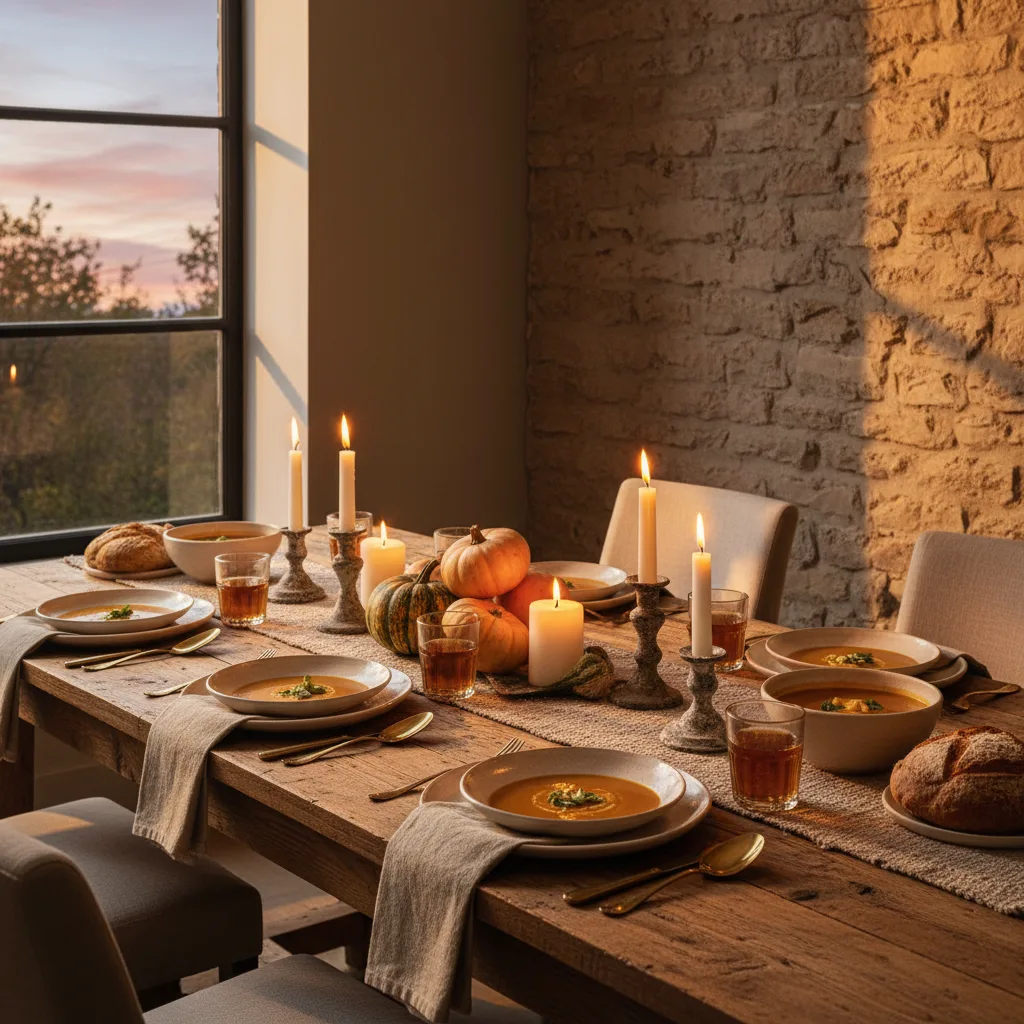
An autumn table setting is an opportunity to embrace texture and nature. A plain linen tablecloth in a neutral or earthy shade provides a good foundation. You can add warmth by draping soft woollen throws or sheepskins over the backs of chairs for guests to use if they feel a chill.
Look to the season for decoration. A handful of small gourds, shapely branches, or deep-red autumn leaves placed down the centre of the table can create a strong focal point without obstructing views. Avoid anything too structured; the aim is a feeling of natural abundance.
Layering adds interest. Use placemats over a tablecloth, or stack a side plate on top of a dinner plate. Simple crockery in stoneware or ceramic textures complements the seasonal theme. Cloth napkins, perhaps tied with a piece of twine and a sprig of rosemary, are a simple detail that adds a considered touch.
Creating Atmosphere with Light
Good lighting is fundamental to creating a warm, intimate mood. Harsh overhead lights can feel clinical and unflattering. Instead, aim for several smaller sources of low, warm light. Use table lamps and floor lamps to create soft pools of illumination around the room. If you have dimmer switches, now is the time to use them.
Candles are indispensable for an autumn gathering. A collection of tapered dinner candles on the dining table casts a gentle, flickering light that encourages conversation. On sideboards or mantels, group pillar candles of varying heights for greater impact. It is best to use unscented candles on the dining table itself, so their fragrance does not compete with the aroma of the food. The principles of using layered, gentle lighting are just as effective for entertaining as they are for creating a calm home environment.
Making Your Guests Feel Welcome
The experience for your guests begins the moment they step through the door. A small, thoughtful gesture is to ensure there is a clear, designated space for them to leave their coats and bags. Even in a compact entrance, simple solutions can make a difference and prevent a cluttered pile from forming. This is part of making the most of an entryway.
Have a drink ready to offer as soon as they arrive. It could be a seasonal cocktail, a glass of wine, or a non-alcoholic option in a nice jug. This simple act of hospitality immediately puts people at ease.
Consider the soundscape of the evening. Silence can feel awkward, but loud music can stifle conversation. Create a playlist of low-tempo instrumental or ambient music to play quietly in the background. It provides a gentle hum that fills any lulls in conversation without being intrusive.
Timing and Flow
A successful evening feels unhurried. Build a loose schedule for yourself, but be prepared to be flexible. Allow a generous amount of time—perhaps 45 minutes to an hour—for guests to arrive, get a drink, and chat before you suggest moving to the table. This prevents latecomers from feeling flustered and allows conversation to build naturally.
Do as much as you can in the hours, or even the day, before. Chop vegetables, prepare marinades, mix dressings, and set the table completely. Treating these tasks as part of a pleasant, preparatory ritual can make the process feel more like the calming activities found in Slow Sunday rituals worth borrowing and less like a chore.
Finally, give yourself permission to relax once the meal is served. Sit with your guests, engage in the conversation, and leave the bulk of the washing-up until after everyone has gone home. The purpose of the evening is to connect, and that is a far greater priority than a spotless kitchen.

Sophie runs our buying guides and keeps a spreadsheet of cost-per-wear for everything she owns.