
Small changes for a calmer bedroom
Your bedroom should be a sanctuary, but it can easily become a space of stress and clutter. A few thoughtful adjustments to textiles, lighting and organisation are all it takes to reclaim it as a place of rest.
By Sophie Lang · 19 September 2026 · Updated 8 October 2026 · 5 min read
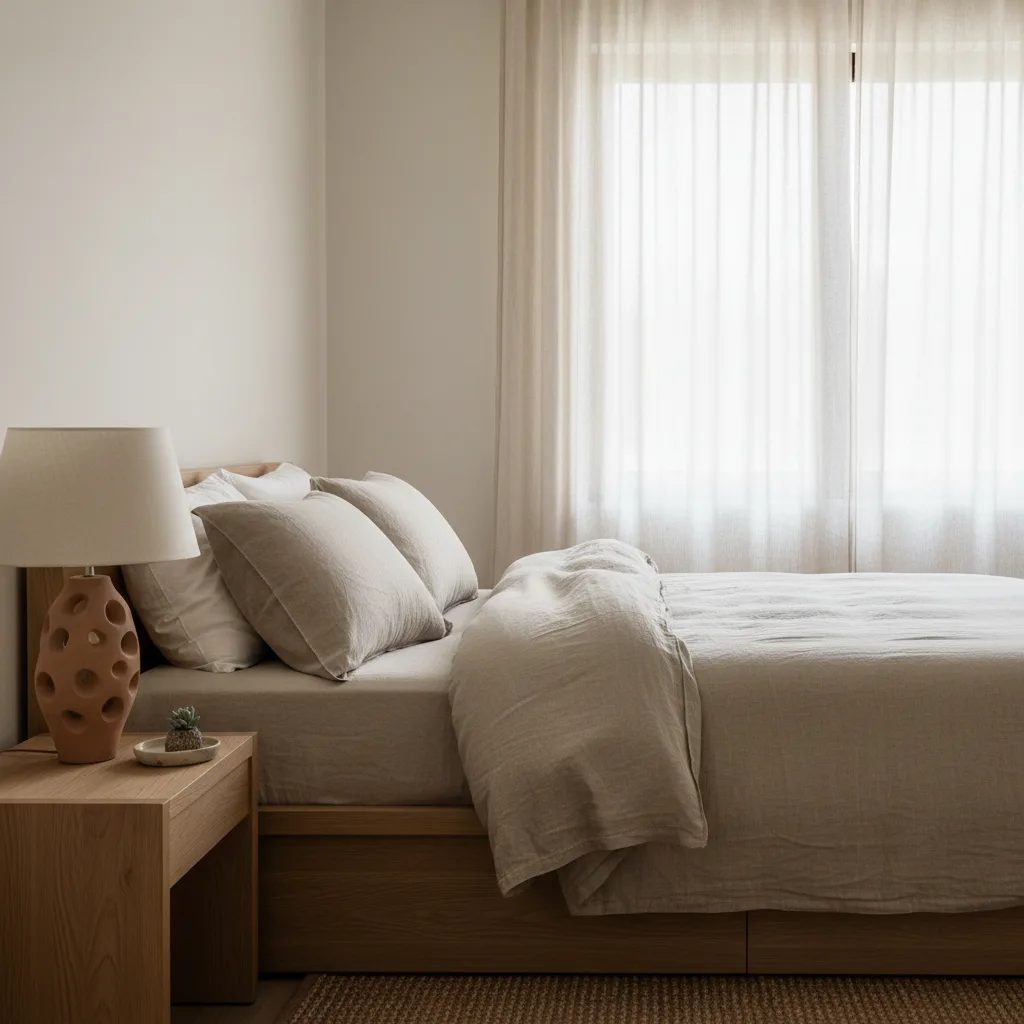
The bedroom should be a space dedicated to rest and retreat. Yet for many of us, it becomes an overspill area for laundry, work, and general life administration. The result is a room that feels busy and distracting, rather than restorative.
Creating a calmer atmosphere, however, does not require a complete overhaul. A series of small, considered adjustments to your lighting, textiles, and organisation can transform the space from a zone of chaos into one of genuine tranquility.
Re-evaluate your bedding
The bed is the focal point of the room, and what it is dressed in sets the tone. Natural fabrics such as linen or long-staple cotton offer breathability and a pleasing softness against the skin. Consider swapping busy patterns for a more cohesive palette of solid, muted colours. Tonal shades of white, grey, stone, or soft blues and greens can create a visually quiet backdrop that is conducive to sleep.
Layering adds both physical comfort and visual interest. A textured quilt or a neatly folded throw at the foot of the bed adds a welcoming touch. A well-chosen wool or cashmere blanket provides warmth without bulk; learning how to judge quality ensures you find one that will last. The daily ritual of making the bed is a simple act that immediately brings a sense of order to the room.
Soften the lighting
Few things are less restful than a single, harsh overhead light. A successful lighting scheme for a bedroom relies on multiple, softer sources. Think in layers: a main ceiling light on a dimmer switch is useful for practical tasks, but day-to-day calm comes from lamps.
Place a lamp on each bedside table for reading, and perhaps add a floor lamp in a corner to cast a wider, gentle glow. The warmth of the bulb is critical. Look for 'warm white' options, which produce a soft, yellowish light rather than the stark, blue-toned light of 'cool white' bulbs. Fabric or paper lampshades will diffuse the light beautifully, preventing glare and creating a soft, ambient atmosphere. For evenings, candlelight offers a flickering, gentle light, but always ensure candles are placed on a stable, heatproof surface and never left unattended.
Address the clutter
A calm mind requires a calm environment, and visual clutter is the enemy of this. Bedrooms often accumulate items that belong elsewhere, from piles of clothes to stacks of books and stray paperwork. The first step is to establish a place for everything. Woven baskets are an excellent solution for corralling stray items, from laundry to extra blankets. On a bedside table, use a small tray to group together your book, hand cream, and water glass. Lidded boxes that slide under the bed can store out-of-season clothing or spare bedding, keeping them dust-free and out of sight.
Pay particular attention to the 'floor-drobe'—the pile of clothes that are neither clean nor dirty. A designated hook on the back of the door or a valet stand can solve this problem. The aim is not stark minimalism, but to have clear surfaces and a sense of order. If the source of the clutter is an overfull wardrobe, tackling a systematic wardrobe clear-out will have a significant impact on the entire room.
Consider all the senses
A tranquil room appeals to more than just the eyes. Consider how your bedroom engages the other senses. For scent, you might use a subtle pillow mist, a reed diffuser with a calming essential oil blend, or simply open the window for fifteen minutes each morning to air the room. Fresh air is one of the most effective ways to reset the atmosphere.
Be mindful of sound, too. If possible, remove electronic devices that beep or emit light. Creating a charging station in another room, like the kitchen or study, helps to mentally disconnect the bedroom from the demands of the digital world. Finally, think about touch. The feeling of a soft sheepskin or deep-pile cotton rug under your feet when you get out of bed is a small but comforting detail. These sensory inputs work together, reinforcing the room’s purpose as a space for rest. Incorporating these small changes into your routine can become a habit, much like the calming practices found in Slow Sunday rituals.

Sophie runs our buying guides and keeps a spreadsheet of cost-per-wear for everything she owns.