Making the most of a small hallway
The hallway sets the tone for your entire home, but it is often the most neglected and cluttered area. Here is how to turn even the smallest entrance into a practical, organised, and welcoming space.
By Sophie Lang · 23 October 2026 · Updated 8 October 2026 · 6 min read
First impressions are formative, and the hallway is the first part of a home that any guest sees. It is also the space that welcomes you back at the end of the day. Yet for all its importance, it can easily become a neglected corridor; a repository for discarded shoes, bulky coats, and unopened post. A small or narrow hallway presents a particular challenge, where every square centimetre counts.
The goal is not to hide all evidence of life, but to create a system that contains the daily comings and goings. With some careful planning around storage, lighting, and layout, even the most compact entrance can function smoothly while feeling calm and considered. It is about making the space work for you, rather than letting it become a source of low-level domestic friction.
Maximise Light and Space
Before considering furniture, look at the basics of the room itself. Light-coloured paint on the walls is a well-known method for making any area feel larger and brighter. Choose pale, neutral tones in a durable finish like eggshell, which can withstand the knocks and scuffs common in a high-traffic zone. Painting the ceiling and woodwork in a similar or slightly lighter shade will further enhance the sense of openness by blurring the boundaries of the room.
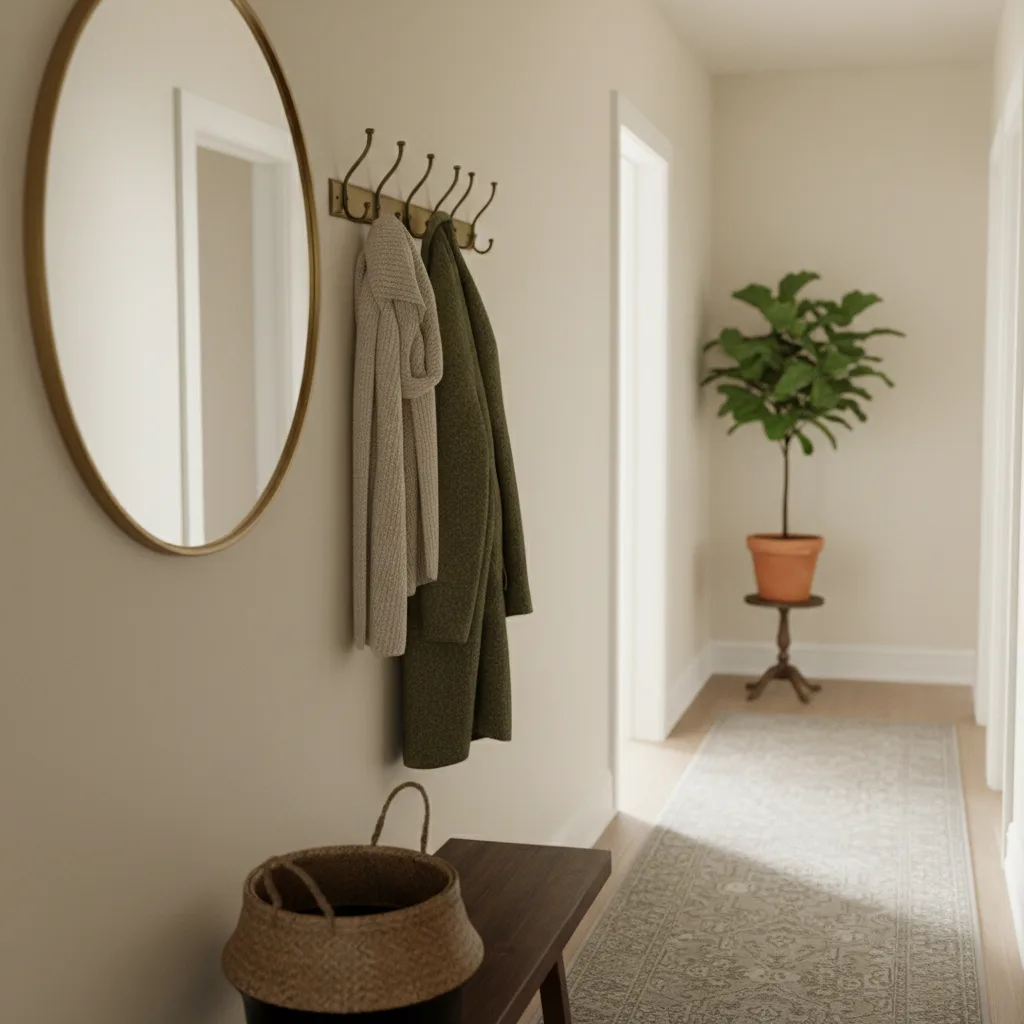
Lighting is critical. A single, central pendant light can cast shadows and make a narrow space feel enclosed. Consider a fitting that diffuses light more evenly, or supplement the main light with one or two wall sconces. If you have space for a slim console table, a table lamp will provide a soft, welcoming glow. Finally, a large mirror is an essential piece. Placed strategically on one of the longer walls, it will bounce light around the room and create a convincing illusion of depth.
Choose Smart Storage
Clutter is the primary enemy of a small hallway. The key is to select storage that is proportionate to the space and addresses your specific needs without encroaching on valuable floor area. A freestanding wardrobe, for example, is usually too deep and visually heavy for a narrow hall.
For coats and bags, a simple peg rail or a set of strong, wall-mounted hooks is often the most effective solution. They keep items off the floor while remaining flush against the wall. For shoes, which can quickly make a floor feel messy, look for very slim, wall-mounted cabinets that tilt open. Alternatively, a narrow bench with integrated shelving or drawers beneath provides both a place to sit and a home for shoes.
Every hallway needs a designated surface for keys, wallets, and post. A slim console table is the classic choice; look for one with thin legs to keep the floor visible, which helps the space feel larger. If a table is too wide, a floating shelf can serve the same purpose without any footprint at all. A few stylish baskets, tucked under a bench or on a shelf, are perfect for containing winter accessories like hats, gloves, and scarves.
Maintain Order Through Habit
The best storage systems will fail if they are not used consistently. A hallway requires a degree of discipline to keep it functioning well. Make it a rule that this space is a transitional zone, not a permanent storage area for items that belong in other rooms. An overflowing coat rack can make the space feel just as cluttered as a pile on the floor.
Only keep the coats and shoes for the current season in the hall; store the rest elsewhere. A regular wardrobe clear-out will make it easier to identify what you actually need access to daily. A quick five-minute tidy each evening or as part of a weekly routine—re-homing items, sorting post, putting away shoes—will prevent clutter from accumulating and ensure the space remains manageable.
Considered Details
With the practical elements in place, a few finishing touches can complete the space. A hard-wearing runner can add colour, pattern, and texture, while also helping to protect the floor. Its long, narrow shape will draw the eye along the hall, accentuating the length of the space and making it feel more like a distinct room.
Avoid adding too many decorative objects, which can quickly look like clutter. A single piece of art on the wall or a small, hardy plant on a shelf is often enough. Applying the principles of a calm space to your entrance can be transformative. A pleasant scent from a reed diffuser or room spray can also contribute significantly to the welcoming atmosphere you want to create as you walk through the door.

Sophie runs our buying guides and keeps a spreadsheet of cost-per-wear for everything she owns.