Buying cashmere: how to judge quality at any budget
Cashmere is a worthwhile addition to any wardrobe, but quality can vary dramatically across different price points. Here’s how to assess a garment’s quality, whatever your budget, and care for it so it lasts.
By Sophie Lang · Updated 8 October 2026
Fashion Help Center may earn a commission when you buy through links on this page. This never affects which products we choose or what we say about them. Learn more.
This guide explains the key indicators of cashmere quality, such as fibre length, ply, and knit tension. It also provides a checklist for what to look for before buying and advice on how to care for your knitwear.
The softness and warmth of cashmere make it one of the most desirable materials in a wardrobe. A well-made cashmere jumper is a true staple, providing warmth without bulk. Yet not all cashmere is created equal. The term is used to describe everything from gossamer-thin jumpers on the high street to substantial, investment-level knits from designer brands, with quality and price varying enormously.
Understanding what makes a quality cashmere garment is key to making a good purchase. Price is not the only indicator; construction, fibre quality, and finish are what determine how well a piece will wear and last. This guide explains what to look for when you are next considering a purchase.
What determines cashmere quality?
Several factors influence the feel, durability, and appearance of a finished cashmere garment. The most important characteristics relate to the yarn itself.
The best cashmere yarn is made from the long, fine fibres from the undercoat of a cashmere goat. Longer fibres can be spun into a stronger, more resilient yarn that is less likely to break or pill. Garments made with shorter, coarser fibres are less durable and will often shed and form small bobbles on the surface with wear.
The ‘ply’ of the yarn refers to how many individual strands are twisted together to make a single thread. A two-ply yarn, where two threads are twisted together, is a good benchmark for quality knitwear. It creates a durable fabric that holds its shape. Single-ply cashmere is less expensive but also less resilient and more prone to developing holes. Yarns with three or four plies are used for heavier, very warm knits that have a more substantial feel.
Finally, the tension of the knit is important. A garment that is knitted tightly, with more stitches per inch, will use more yarn and be more expensive to produce. However, it will also be warmer, more durable, and better at retaining its shape. A loose, airy knit might feel soft initially but is more likely to stretch and snag.
What to check before you buy
When assessing a cashmere item in a shop, there are a few simple tests you can perform.
- Examine the surface feel. Good quality cashmere feels smooth and soft, but not excessively so. An overly fluffy texture can indicate that the garment has been treated with chemical softeners to disguise the use of lower-quality, short fibres. This can weaken the material over time.
- Gently stretch a small section of the garment, such as the hem or a cuff. It should spring back into its original shape. If it sags or doesn't recover, it suggests a loose knit or poor-quality yarn that will not wear well.
- Hold the garment up to the light. Unless it is designed to be a very fine, lightweight piece, you should not be able to see through it easily. A dense, uniform knit is a sign of good construction and higher yarn content.
- Rub the surface of the fabric between your fingers in a discreet area. While almost all cashmere will show some minor pilling over time, poor-quality cashmere may start to form noticeable bobbles almost immediately.
Finding cashmere at different price points
Cashmere is available from a wide range of retailers, and it is useful to know what to expect in each category.
Mass-market and high street retailers often offer the most accessible entry point to cashmere. This is where quality can be most inconsistent, so it is important to use the physical checks above. You might find single-ply knits or cashmere blended with other fibres like merino wool or synthetics. A small percentage of cashmere in a blend will not provide the same softness or warmth as a pure garment, so always check the composition label. This is where understanding how to assess construction becomes particularly useful for judging the quality of any knit.
At the premium and designer level, you can generally expect to find higher-grade cashmere. These pieces are often made with longer fibres and two-ply yarns, resulting in a garment that is softer, warmer, and more durable. The focus is on creating an investment piece that will hold its shape and last for many years. When investing at this level, it is worth choosing versatile, lasting colours that will work hard in your wardrobe.
The pre-owned market is another excellent route for acquiring high-quality cashmere. Because well-made cashmere is so durable, second-hand pieces can be in exceptional condition. This allows you to purchase from premium brands at a more accessible price. When buying pre-owned, inspect the item carefully for any small holes from moths, stains, or areas of significant pilling, particularly under the arms.
How to care for your cashmere
Proper care is essential for extending the life of your knitwear. Always check the care label first. Most cashmere can be hand-washed in cool water with a gentle, specialist detergent. Alternatively, use your washing machine's hand-wash or delicate cycle inside a mesh laundry bag.
Never wring out a cashmere garment. Instead, gently squeeze out excess water and reshape it whilst damp. Dry it flat on a clean towel or drying rack, away from direct sunlight or heat sources like radiators. To manage the small bobbles that can appear with friction, use a cashmere comb or a fabric de-piller, laying the garment flat and working gently in one direction.
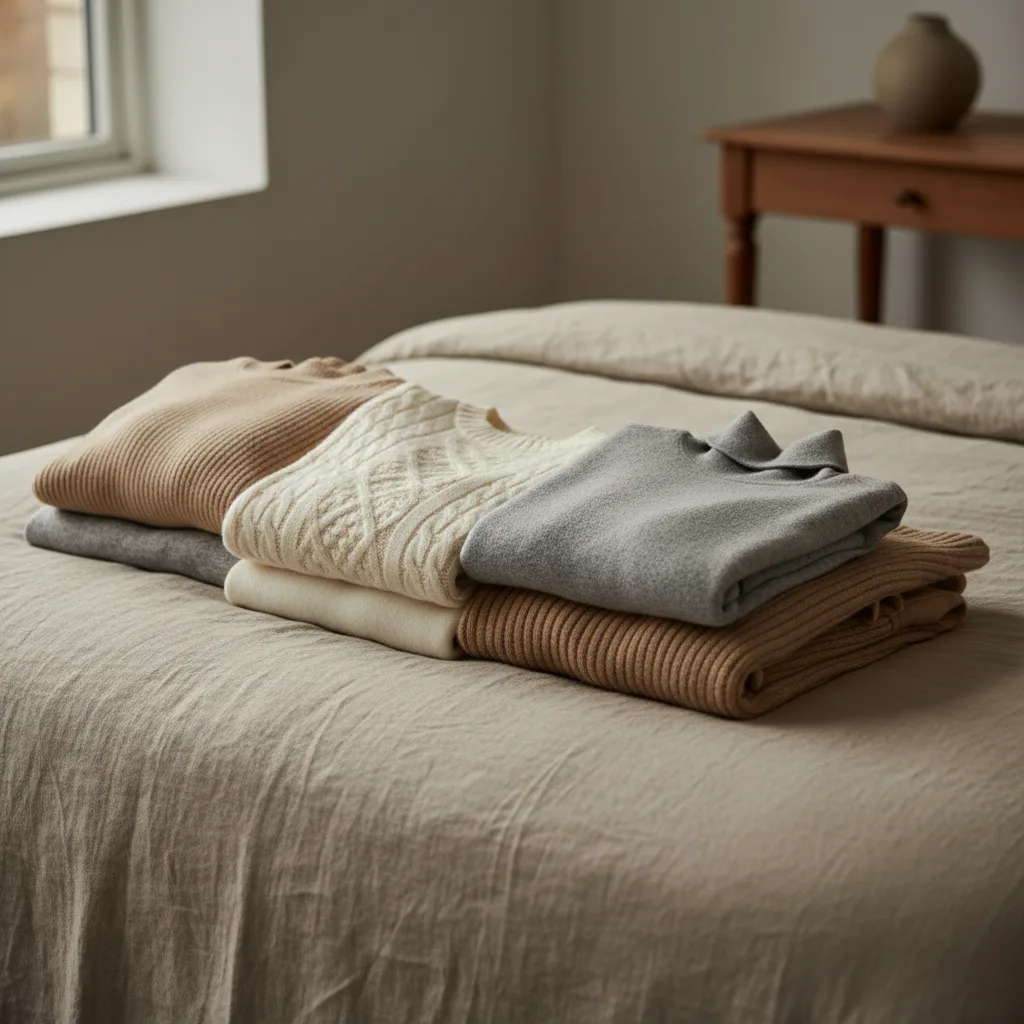
For storage, it is best to clean your knitwear before putting it away to deter moths. Fold your jumpers rather than hanging them, as hanging can cause the shoulders to stretch and lose shape. Properly storing your knitwear in a drawer or on a shelf with cedar balls or lavender sachets will help protect it.
Our recommendations
Questions, answered
Why does my cashmere jumper pill?+
Pilling is a natural process caused by friction, where shorter fibres in the yarn tangle together to form small bobbles. All cashmere can pill, especially in high-friction areas like under the arms, but higher-quality cashmere made from longer fibres will pill significantly less. It can be managed with a cashmere comb.
Is more expensive cashmere always better?+
Generally, a higher price reflects better raw materials (longer fibres), a denser knit, and superior construction, which result in a more durable garment. However, price isn't the only factor. Using the quality checks in this guide will help you assess any garment, regardless of its price tag.
What does 'ply' mean for cashmere?+
'Ply' refers to the number of cashmere threads twisted together to create the yarn. A two-ply yarn is a good standard for a quality garment, as it offers durability and shape retention. Single-ply is thinner and less resilient, while three or four-ply yarns are used for heavier, warmer, and more substantial knits.

Sophie runs our buying guides and keeps a spreadsheet of cost-per-wear for everything she owns.