
Ballet flats or loafers? Choosing the right flat for you
The loafer and the ballet flat are two foundational flat shoe styles. We compare them on practicality, style, and longevity to help you decide which is right for you.
By Eleanor Hart · 12 August 2026 · Updated 8 October 2026 · 6 min read
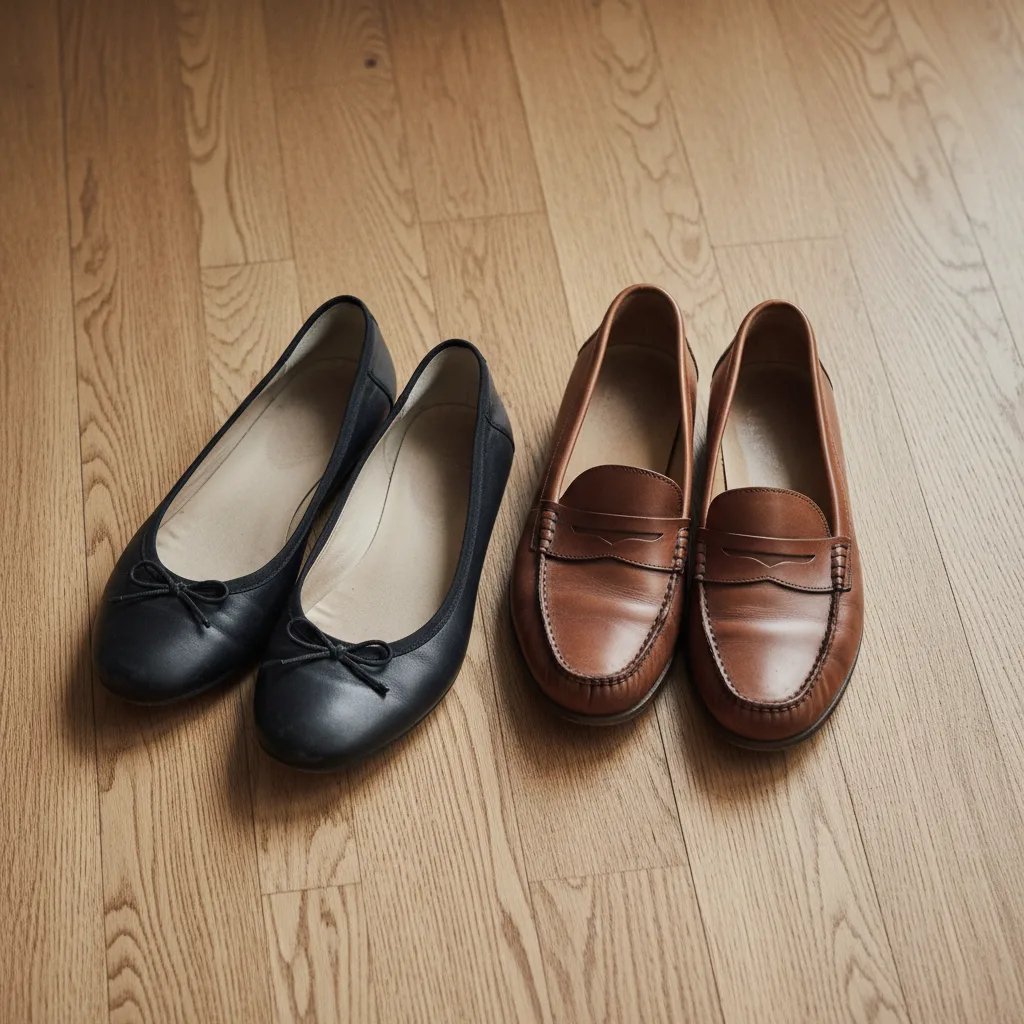
Flat shoes are a wardrobe non-negotiable, but deciding on the right style can be a difficult choice. Two of the most enduring options are the ballet flat and the loafer. Each has a distinct character and history, and each brings something different to an outfit. While the ballet flat suggests a certain softness and poise, the loafer has a more solid, academic feel. Recognising their fundamental differences is key to choosing the right shoe for your personal style, your wardrobe, and your day-to-day life.
Choosing between them is less about which is objectively 'better' and more about which shoe aligns with your needs. The decision rests on several factors: the clothes you wear most often, your priorities for comfort and support, the climate you live in, and how much maintenance you are prepared to undertake. Here, we break down the key characteristics of each style.
The Profile of a Ballet Flat
With its origins in dance, the ballet flat is defined by its pliable structure, delicate profile, and thin sole. It is inherently soft and flexible, designed to mould to the foot. The typical silhouette features a rounded or softly squared toe and a low-cut top line that exposes much of the upper foot. This construction gives it a light, barely-there feeling that many people find appealing, particularly for warmer weather.
These characteristics inform how it works with clothes. The minimal shape sits well with other delicate pieces, like silk slip skirts, summer dresses, and fine-gauge knits. They are also a classic partner for cropped trousers and slim-fit jeans, where the exposed ankle creates a clean line. A ballet flat can work with wider trousers, such as barrel-leg jeans, provided the hem is short enough to show some ankle, preventing the leg from looking truncated.
From a comfort perspective, the very features that make the shoe feel light can also be its downfall. Most ballet flats offer minimal arch or sole support, which may become uncomfortable after many hours of walking on hard pavements. Those with wider feet might find the typically narrow shape restrictive.
The Structure of a Loafer
The loafer, by contrast, is a study in structure. It is a more substantial shoe, descended from moccasins but defined by its sturdier construction, separate sole, and low, block heel. Loafers have a higher vamp (the part covering the top of the foot), which holds the shoe securely in place and contributes to its formal, borrowed-from-the-boys character. They are often made from polished leather, suede, or patent leather, and can feature details like a penny slot, tassels, or horsebit hardware.
This solidity makes the loafer a natural companion for tailoring. It anchors a suit, smartens up a pair of trousers, and gives weight to simple jeans and a jumper. It is a useful component when building a workwear wardrobe. A loafer can also provide an interesting contrast to more feminine items, grounding a floaty floral dress or a pleated midi skirt in a way a ballet flat cannot.
The robust build generally translates to greater comfort and support. The thicker sole provides better cushioning from the ground, and the small heel offers a slight lift that many find more comfortable for walking than a completely flat shoe. The roomier toe box on many classic loafer styles can be a good fit for a wider foot.
Seasonality and Practicality
Your choice might also be dictated by the seasons. The ballet flat is at its best in dry, mild conditions. It is a quintessential spring and summer shoe, ideal for sunny days and indoor events. Its delicate construction and the materials it is often made from (such as satin, canvas, or fine nappa leather) make it vulnerable to rain, puddles, and grit. A damp British pavement is no place for a thin-soled pump.
The loafer is a more versatile, three-season shoe. A well-made leather loafer is a transitional weather staple, capable of handling an April shower or a crisp October morning. In cooler months, they can be worn with fine-gauge wool socks or opaques for additional warmth, adding another layer of styling potential. Heavier, chunky-soled loafers offer even more protection from the elements, making them a practical choice for much of the year in the UK.
Care and Longevity
Finally, consider the lifespan of your shoes. Due to their delicate nature, ballet flats can have a shorter life. The thin leather or fabric soles wear down quickly, and the soft uppers are prone to scuffs and water damage. While they can be repaired, their simple construction sometimes makes resoling difficult or impossible.
Loafers, particularly those with a Goodyear-welted or stitched construction, are built to last. Their sturdy leather uppers can withstand more wear and are easier to clean and protect. The more substantial soles mean they can be replaced by a good cobbler multiple times, extending the life of the shoe significantly. Investing in proper care for leather shoes will pay dividends, ensuring a pair of classic loafers can remain in your wardrobe for years, if not decades.
Eleanor has spent fifteen years editing fashion for print and digital titles. She believes in fewer, better things and a very good coat.

