
How to care for leather shoes so they last for years
A good pair of leather shoes is an investment. With the right care routine, from cleaning and conditioning to proper storage, they can last for decades.
By Eleanor Hart · 21 October 2026 · Updated 8 October 2026 · 6 min read
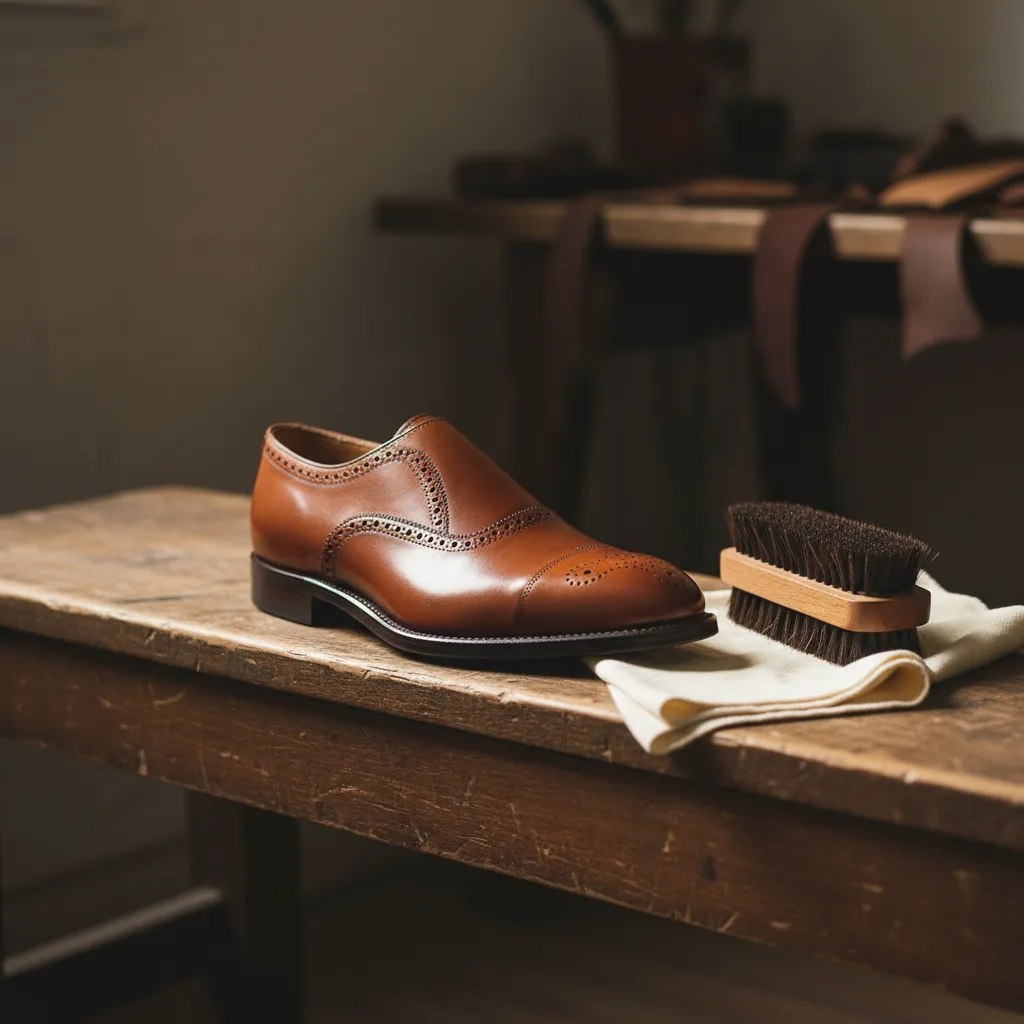
Leather shoes are a cornerstone of a well-constructed wardrobe. They can be repaired, resoled, and can mould to your feet over time, becoming more comfortable with each wear. This longevity, however, is not guaranteed. It depends entirely on a consistent care routine.
Looking after leather is less complicated than it might seem. It involves a series of simple, regular actions that protect the material from moisture, prevent cracking, and maintain the shoe's original shape. From brogues and boots to loafers and other flat styles, these methods will extend the life of your most-worn footwear.
Give Them a Rest
The most crucial step in shoe care is also the simplest: do not wear the same pair every day. Leather is a porous material that absorbs moisture from your feet throughout the day. Giving shoes at least 24 hours to air out and dry completely is essential for their preservation.
Constant wear without a rest day prevents the leather from recovering, which can lead to stretched, misshapen uppers and a damp interior that degrades the lining and insole. Rotating between two or three pairs of shoes is a practical way to ensure each pair has adequate time to dry.
Use Shoe Trees
When you are not wearing your shoes, they should be stored with shoe trees inside. These devices are far more than just a storage accessory. They perform two vital functions: maintaining the shoe’s shape and absorbing residual moisture.
As leather dries, it can contract and curl, particularly around the toe box where the shoe flexes. A shoe tree holds the shoe in its correct shape, preventing deep creases from setting in and stopping the toes from curling upwards.
Unfinished cedar wood trees are particularly effective as the porous wood naturally draws out moisture and odour, helping the shoe to dry from the inside out and leaving it fresh for its next wear. Plastic trees will maintain shape but lack these absorbent properties.
A Regular Cleaning Routine
Dirt and dust are abrasive and can cause microscopic scratches on the surface of the leather, dulling the finish over time. A quick clean after each wear is a good habit to form. Use a horsehair brush to sweep away any surface dirt and dust from the uppers and the welt (the seam where the upper joins the sole).
For more stubborn marks, wipe the shoe with a slightly damp cloth. Avoid using harsh soaps or household cleaners, which can strip the natural oils from the leather. For specialised materials like suede or nubuck, specific brushes and erasers are required to clean the surface without damaging the delicate nap.
Conditioning and Polishing
Just like skin, leather needs moisture to stay supple and strong. Over time, it can dry out, leading to brittleness and cracking. A leather conditioner nourishes the material, restoring its essential oils. The frequency depends on how often you wear the shoes and in what conditions, but conditioning them every few months is a good baseline.
Apply a small amount of a neutral leather cream or conditioner with a soft cloth, using small, circular motions. Pay special attention to areas that flex. Allow it to absorb for a few minutes before buffing off any excess with a clean brush or cloth.
Polishing is a separate step that adds shine and a layer of protection. Wax-based polishes create a high-gloss finish and offer some water resistance, while cream polishes provide more subtle colour restoration and conditioning.
Dealing with Wet Weather
Getting caught in the rain is sometimes unavoidable. If your leather shoes get soaked, the immediate aftermath is critical. Never place them near a direct heat source like a radiator or fireplace, as rapid drying will cause the leather to shrink, stiffen, and crack.
Instead, stuff the shoes loosely with absorbent, unprinted paper (newspaper can transfer ink) or a small, dry towel. This will draw moisture out from the inside. Let them air dry naturally at room temperature for at least 24-48 hours, replacing the paper once it becomes saturated. Once completely dry, they will almost certainly need conditioning.
Prevention is also effective. A quality waterproofing spray can be applied to new shoes and reapplied periodically. It creates a breathable barrier that causes water to bead and roll off the surface. For footwear expected to face the worst of the elements, such as boots designed for wet weather, this preventative treatment is particularly important.
Know When to Visit a Cobbler
Even with meticulous care, soles and heels will eventually wear down. A good cobbler can replace these parts, giving your shoes a new lease of life. Inspect your shoes regularly for signs of wear. If the soles are developing soft spots or holes, or the heel has worn down unevenly to the point it affects your gait, it is time for a repair.
The construction of the shoe often dictates how easily it can be repaired. Shoes with a Goodyear-welted construction are designed to be resoled multiple times, making them a worthwhile long-term investment. A cobbler can also perform smaller repairs, such as replacing broken eyelets or stitching loose seams, long before they become major issues.
Long-Term Storage
For shoes that you will not be wearing for an entire season, proper storage is key. First, ensure they are completely clean and dry. It is also a good idea to give them a final conditioning treatment before putting them away.
Store them with shoe trees inside to maintain their shape. Place them in breathable fabric shoe bags rather than plastic boxes, which can trap moisture and encourage mould. Keep them in a cool, dark, and dry place with stable temperatures, such as a wardrobe, away from direct sunlight which can fade and dry out the leather.

Eleanor has spent fifteen years editing fashion for print and digital titles. She believes in fewer, better things and a very good coat.