How to pack a weekend bag without overpacking
Arriving at your destination with a perfectly packed bag is a quiet triumph. Here is a practical method for packing less for a weekend away, while still having everything you need.
By Sophie Lang · 5 September 2026 · Updated 8 October 2026 · 6 min read
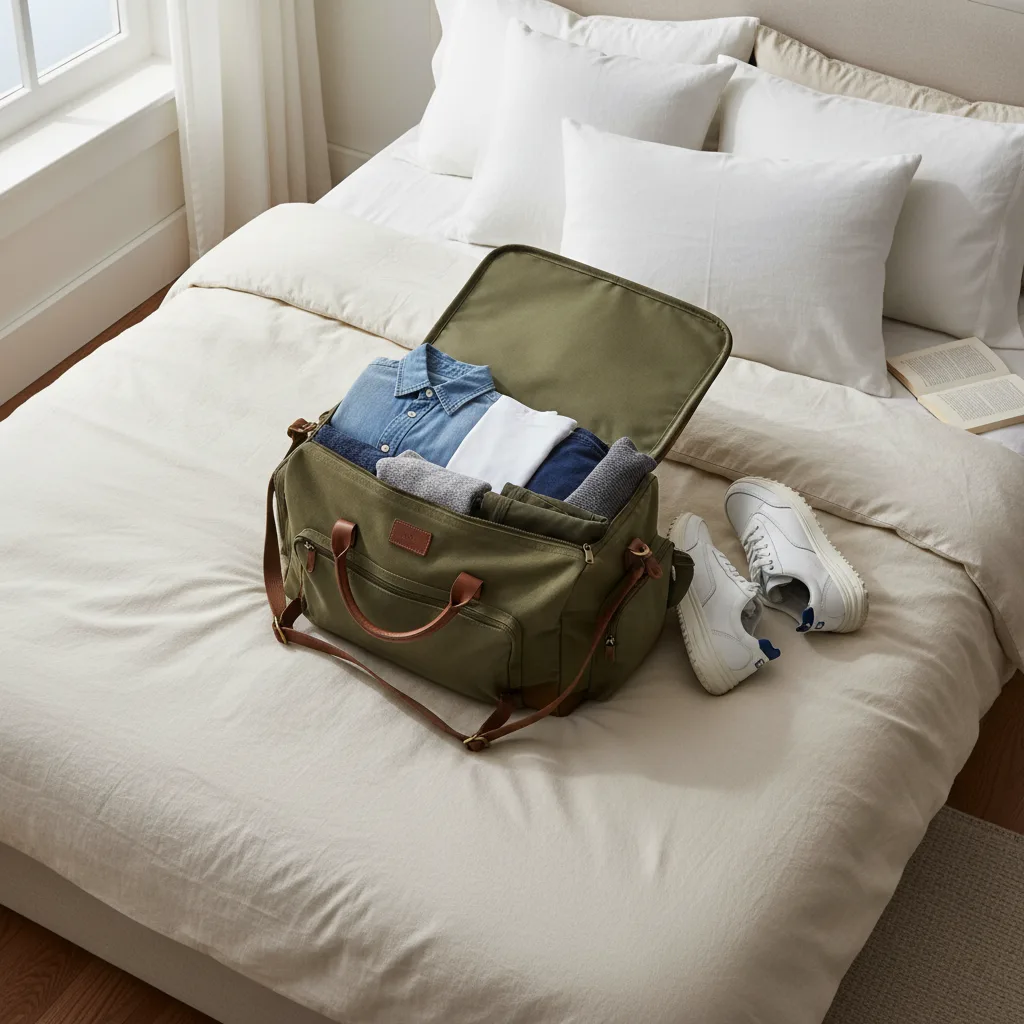
The prospect of a weekend away is often tempered by the challenge of the weekend bag. For many, packing descends into a familiar ritual of indecision, resulting in a bag that is either overstuffed with ‘just in case’ items or frustratingly lacking a single cohesive outfit. The chronic overpacker and the haphazard underpacker share the same problem: a lack of strategy.
Packing well is not simply about carrying less; it is about carrying what is needed. It requires a methodical approach that begins long before anything is placed in a bag. By shifting the focus from gathering items to planning outfits, you can build a small, functional, and versatile travel wardrobe that works for your specific trip. The goal is to feel prepared and composed, with a bag that contains precisely what you need, no more and no less.
Start with an itinerary, not a pile of clothes
The most common packing mistake is to pull out favourite pieces of clothing and hope they will somehow form outfits at your destination. A more effective method is to pack backwards from a plan. Start by checking the weather forecast. Next, write a simple list of your anticipated activities, from the journey itself to dinners out, countryside walks, or gallery visits.
Against each activity, plan a complete outfit. Be specific. Instead of ‘a top and trousers’, write ‘cream silk shirt, navy tailored trousers, loafers’. This process forces you to think in terms of whole looks, not disparate items. It immediately highlights which pieces can be worn more than once. The jumper you wear for a walk on Saturday could be paired with a different shirt and trousers for brunch on Sunday. This step alone significantly reduces the temptation to include items that have no clear purpose. Knowing how to layer for weather that changes by the hour is also an invaluable skill for any trip, allowing you to adapt a single core outfit for different temperatures.
Work within a colour palette
A restrained colour palette is the foundation of an efficient travel wardrobe. By limiting your selection to three or four complementary shades, you ensure that almost every item can be worn with every other item. This exponentially increases your outfit options without adding bulk.
Choose two neutral base colours, such as navy and cream, or grey and camel. Then, add one or two accent colours that work with each other and with your chosen neutrals. For instance, a base of black and white can be complemented by a soft blue and a burgundy. This structure ensures that a single pair of black trousers will work with every top you pack, and a single piece of knitwear can be layered over multiple outfits. Every piece earns its place.
To roll or to fold?
The debate over rolling versus folding often presents it as an either/or choice, but the best approach is to use both methods. The right technique depends entirely on the fabric and structure of the garment.
Rolling is highly effective for saving space and minimising wrinkles in soft, pliable clothing. T-shirts, jersey dresses, fine-gauge knits, and pyjamas all compress well when rolled tightly. This technique makes them easy to arrange in a bag and helps to prevent deep-set creases.
Folding is preferable for more structured or delicate garments. Tailored items like blazers, smart trousers, and crisp cotton shirts benefit from careful folding along their natural seams to maintain their shape. Items with sharp pleats or delicate embellishments should also be folded carefully, perhaps with a layer of tissue paper to protect them. Using packing cubes can help to organise both rolled and folded items, keeping your bag tidy.
Decant your toiletries
Full-sized beauty and grooming products are heavy, bulky, and entirely unnecessary for a two or three-night stay. Decanting your essentials into travel-sized containers is one of the simplest ways to reclaim a significant amount of space in your bag. This practice is not just for adhering to airline liquid restrictions; it is a smart habit for any form of travel.
Invest in a set of good-quality, reusable bottles and small pots. Analyse what you truly need for a few days, rather than transporting your entire bathroom cabinet. Consider solid versions of products like shampoo, conditioner, and cleanser, which eliminate the risk of leaks and save further space. Refining your packing list for toiletries can also inform your daily routine at home; planning a five-minute make-up routine helps you identify which products are truly essential.
Adhere to the three-shoe rule
Footwear is notoriously difficult to pack, taking up a disproportionate amount of space. Being disciplined with your shoe selection is therefore critical. For most weekend trips, three pairs is the maximum you should need.
The first rule is to wear the heaviest pair for the journey. This is likely to be a pair of boots or substantial trainers. This single action frees up a large amount of room inside your bag. For the two pairs you pack, consider your planned activities. A typical combination includes a comfortable pair for daytime walking (such as loafers, ballet flats, or smart trainers) and a second pair for evenings or smarter occasions (this could be a heeled boot, a dressy flat, or a simple court shoe).
The specific selection depends entirely on your destination and itinerary. Always use shoe bags or reusable covers to protect your clothes from the soles of your shoes. This small step also contributes to the longevity of your footwear, which is an important part of how to care for leather shoes so they last for years.

Sophie runs our buying guides and keeps a spreadsheet of cost-per-wear for everything she owns.